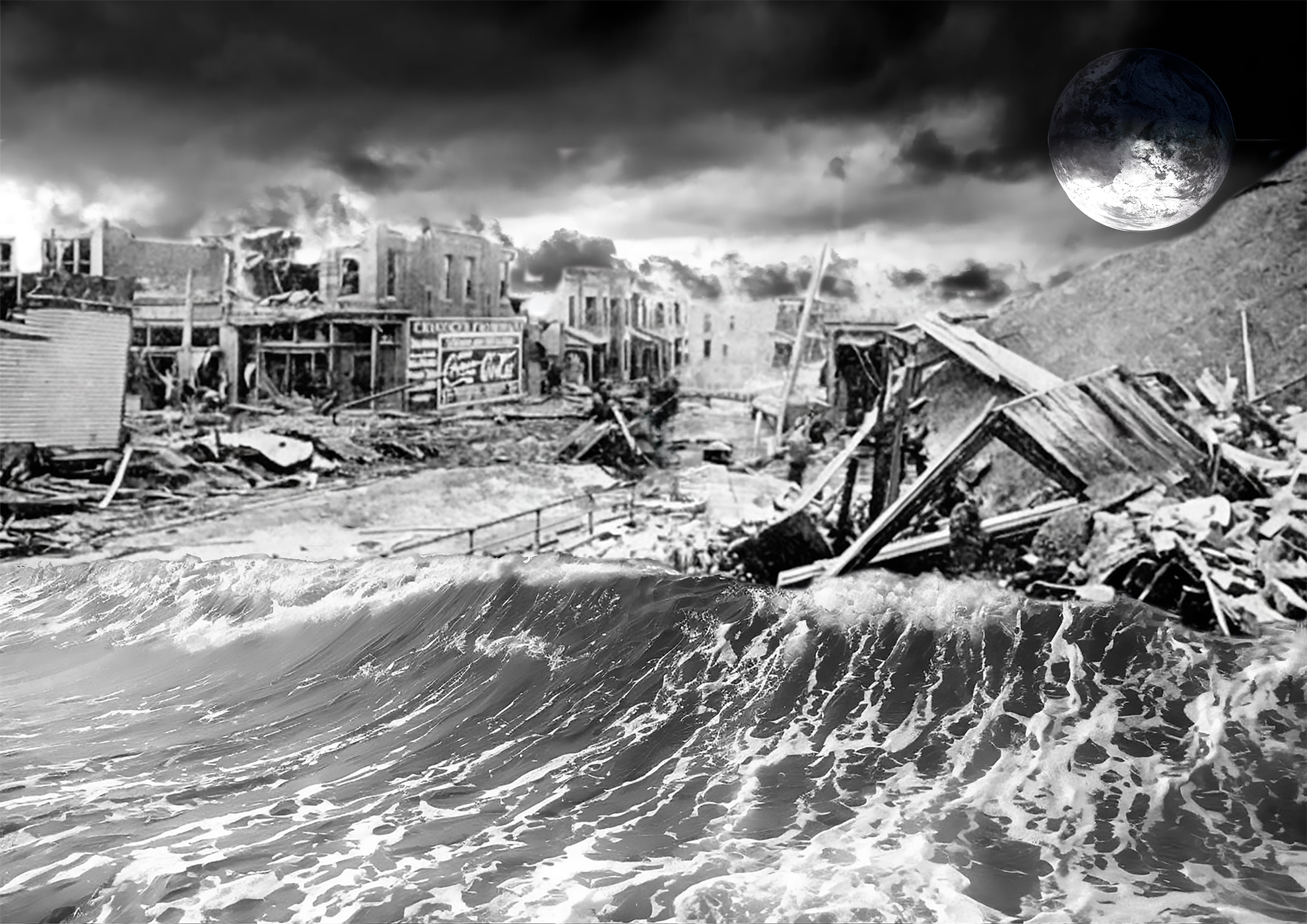
Bad Moon Rising: An Omen of Desaster Written Across the Sky.
The latest large-format work presents a retrospective on this song by Creedence Clearwater Revival from 1969, the year of the moon landing. Arslohgo compresses three layers of imagery into an apocalyptic diagnosis of our times, reaching far beyond its immediate visual material.
The What & the Why: Time, Possibility, and more
Reflections on Time, Possibility, the Magic of Imagination, the Idea, and the Nature of Leaping in Creative Work.
Colour as Argument: The New Chromatic Investigations
Let's start with a provocation: color is not decorative. It is not the emotional mood drifting across the surface of a work…
Lohgorhythms: On the Freedom of the Long Way Around
Every system has a rhythm. The question is whether the rhythm serves the system — or whether the system exists to make the rhythm audible.

Not A Mirage, IS It
Digital image at 300 ppi, 4200 × 5940 pixels. It is about the fact that the question itself is the answer – and vice versa, a conceptual double floor: Earth hovers above the desert – and it is very close, and it is unreachably far away.
See full work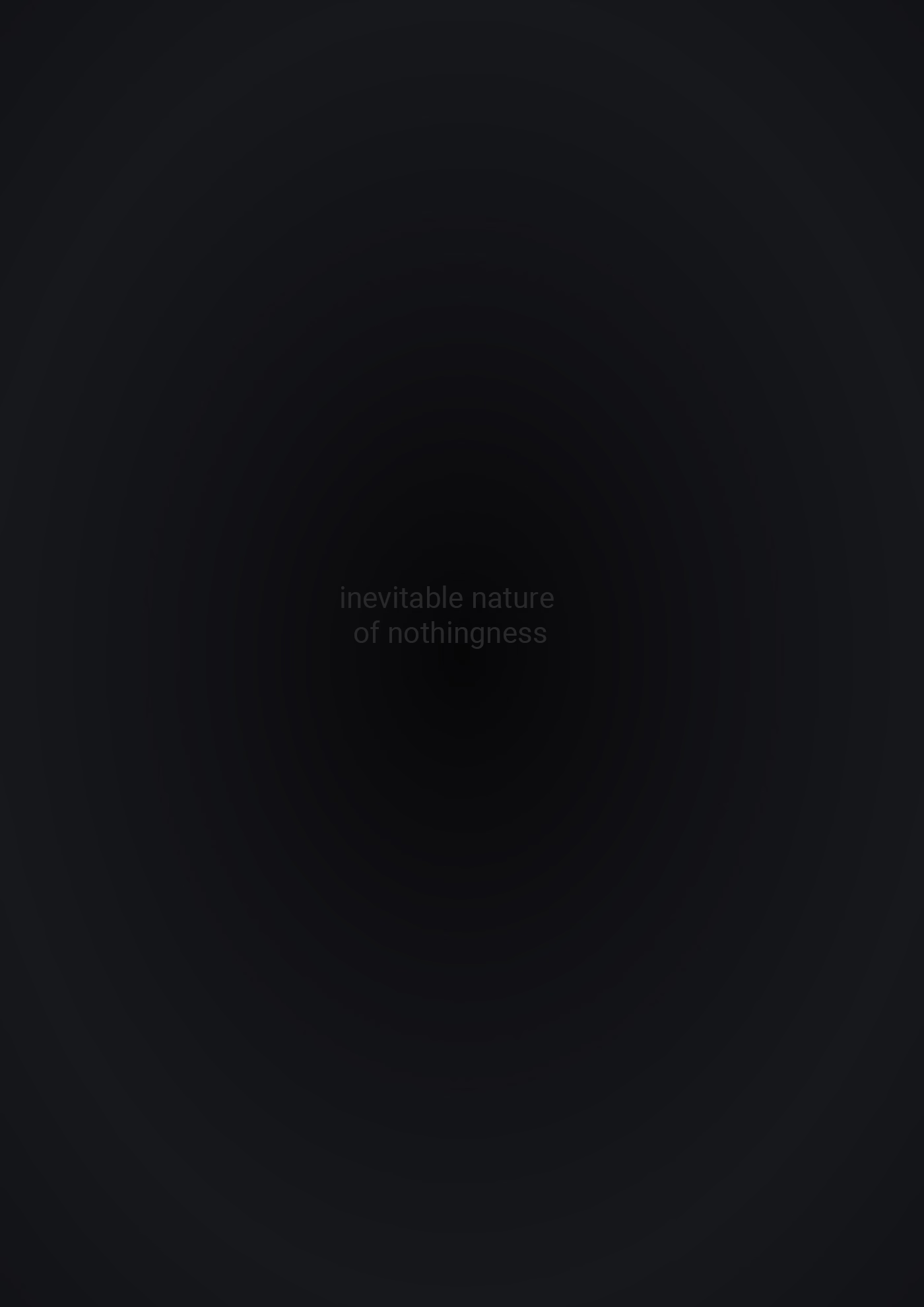

The Sartrean Dimension in the Works and Texts
Jean-Paul Sartre never wrote an essay about Arslohgo. That fact is less obvious than it sounds, because Sartre did write about Giacometti, about Tintoretto, about Wols — about artists in whose work he saw existential truths flash into view. Arslohgo, the creator of the digital art project Artdig WorX (adw.lohgo.net), is a contemporary Sartre could never have encountered.
And yet: anyone who knows this digital artist’s work — who reads his image-texts, browses his categories, and listens to what he says about himself — will sense a philosophical kinship that goes beyond mere analogy. rslohgo works in a Sartrean mode, not because he has read or cited Sartre, but because his entire practice rests on the…
Continue ReadingColor as Argument: The New Chromatic Investigations
Let's start with a provocation: color is not decorative. It is not the emotional mood drifting across the surface of a work to produce something vaguely appropriate in the viewer. Color, deployed with full seriousness, is a logical operation — a statement about the world that can be contested, defended, refuted, and revised. It is, in the strictest sense of the word, an argument.
This runs counter to what most of us were taught. We learned that color is feeling: red means passion, blue means melancholy, yellow means joy. That is the grade school of color — and it has done more damage to serious visual thinking than almost anything else I can name. It reduces one of the most complex instruments available to a creative person to a simple code: preset signals…
Continue Reading"The work is not a record of what was felt. It is the feeling — made stubborn, made permanent, made available to a stranger at some later hour."